

Why Wear a Miraculous Medal: Meaning & Blessing Guide
Table of Contents
Why Wear a Miraculous Medal: A Sign of Faith and Protection
The Miraculous Medal Meaning: Symbolism of the Front and Back
The Front: Mary Standing on the Globe
The Back: The Cross, the 'M', and the Two Hearts
How to Read a Medal in Your Hand
The Prayer Engraved on the Medal
Blessing and Investiture of the Miraculous Medal
What Happens During the Rite
How to Wear a Religious Medal: Practical Guidance
Caring for Your Medal: Keeping It in Good Condition
Devotion or Superstition? The Catholic Distinction
Gifting a Miraculous Medal: Etiquette for Sacramental Occasions
Gifting to a Non-Catholic
Gifting to a Lapsed or Returning Catholic
Practical Choices by Occasion
Frequently Asked Questions
Last Updated: October 4, 2026
Why Wear a Miraculous Medal: A Sign of Faith and Protection
The Miraculous Medal is a small devotional medal, worn by Catholics as a sign of faith and a request for Mary's protection.
The medal began with a series of apparitions to Saint Catherine Labouré in Paris in 1830.

Key Takeaway A Miraculous Medal is a sacramental, not a charm. It works through faith and prayer, not through the object itself.
The Miraculous Medal Meaning: Symbolism of the Front and Back
The Miraculous Medal meaning is carried entirely in its imagery, and every detail on both faces points back to Catholic doctrine. The front shows Mary as the Immaculate Conception, the back shows the cross and the two hearts. Nothing on the medal is decorative. Each element teaches something about grace, the Trinity, and the relationship between Jesus and his mother.
The Front: Mary Standing on the Globe
The front of the medal shows Mary standing on a globe, her feet crushing a serpent beneath them. Rays of light stream from rings on her fingers, and the words "O Mary, conceived without sin, pray for us who have recourse to thee" encircle her.
Read the front in four layers:
The globe, the whole world, held beneath her feet, not a single nation or era
The serpent, the ancient enemy, crushed underfoot, echoing Genesis 3:15
The rays, graces flowing outward from her hands to those who ask for them
The dark rings, graces that remain unclaimed because no one has asked
The dark rings are the detail most people miss. They are not a flaw in the engraving. They are a quiet prompt: the graces are there, and they wait on a request.
The Back: The Cross, the 'M', and the Two Hearts
The reverse side carries a cross with a bar beneath it, the letter 'M' intertwined with the cross, and two hearts below, one crowned with thorns and one pierced by a sword. Twelve stars frame the whole image. The 'M' and cross together are read as Mary standing at the foot of the cross. The two hearts belong to Jesus and Mary, and the twelve stars echo the woman clothed with the sun in Revelation.
Each element on the back carries its own reference:
The cross and bar, the altar of sacrifice, with the bar often read as the foot of the cross
The intertwined 'M', Mary at the foot of the cross, her initial bound to it, not beside it
The heart crowned with thorns, the Sacred Heart of Jesus
The heart pierced by a sword, the Immaculate Heart of Mary, echoing Simeon's prophecy in Luke 2:35
The twelve stars, the woman clothed with the sun in Revelation 12:1, read as a figure of Mary and the Church
How to Read a Medal in Your Hand
If you are holding a medal and want to confirm what you have, the front and back are not interchangeable. The front always carries the figure of Mary and the encircling prayer. The back always carries the cross, the 'M', and the two hearts.
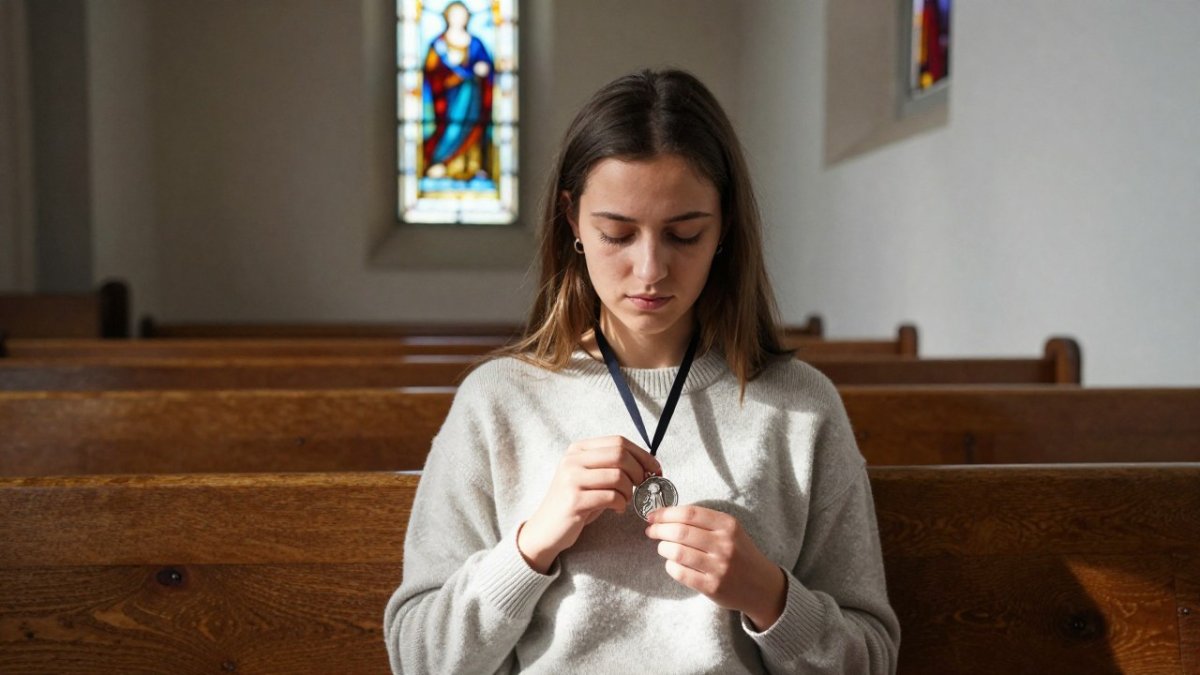
A common pattern among the faithful is to turn the medal over in the hand during prayer, front for the petition, back for the meditation on the cross and the two hearts.
Key Takeaway The front of the medal is a petition; the back is a summary of the Passion and the two hearts. Together they carry the whole devotion in a single object.
The Prayer Engraved on the Medal
The prayer on the medal reads: "O Mary, conceived without sin, pray for us who have recourse to thee." It is a short petition, but it carries the whole theology of the medal in one breath. The phrase "conceived without sin" affirms the Immaculate Conception.
Many Catholics pray this line daily, often as part of a morning offering or alongside the Rosary. It is not a magic formula.
Blessing and Investiture of the Miraculous Medal
A Miraculous Medal can be worn as soon as it is blessed, and any priest can perform that blessing. Investiture, in which a person is formally enrolled and the medal is blessed for their use, is a distinct rite with its own prayers. According to the Catechism of the Catholic Church on sacramentals, sacramentals such as medals prepare the faithful to receive grace and dispose them to cooperate with it.
What Happens During the Rite
During investiture, the priest blesses the medal with holy water and prayers, then places it on the recipient or hands it over for them to wear. The rite does not change the medal itself. It sets the medal apart for devotional use and marks the wearer's intention to live out their faith. If a medal is later replaced, the new one should be blessed in the same way.
Pro Tip If you cannot arrange investiture before a gift is given, have the medal blessed first. The recipient can be enrolled later, and the medal is fully wearable in the meantime.
How to Wear a Religious Medal: Practical Guidance
Knowing how to wear a religious medal properly comes down to three things: placement, intention, and comfort. There is no rule that the medal must touch the skin, though many people prefer it that way.
Around the neck on a cord or chain, the most common choice for daily wear
Pinned inside a garment for those who prefer it hidden
Attached to a Rosary or carried in a pocket when a cord is impractical
On a bracelet for children or anyone who removes necklaces often
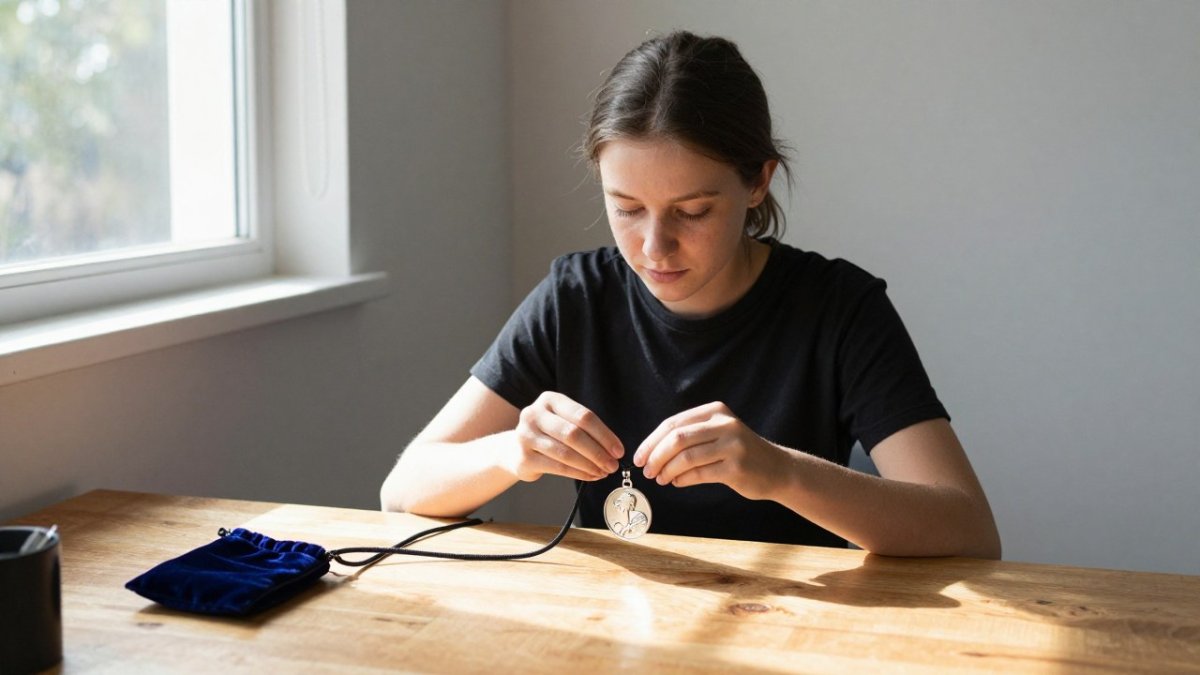
A black cord is a practical option for everyday use, particularly for children and for anyone in physical work. It sits lightly, does not tarnish, and can be replaced easily if it wears out.
Caring for Your Medal: Keeping It in Good Condition
Medals tarnish, flake, and discolour over time, and how you store and clean them makes most of the difference. A common mistake is leaving a medal on while swimming, showering, or applying perfume and lotion, all of which speed up tarnishing.
Remove the medal before swimming, bathing, or heavy cleaning
Store it in a small pouch or box when not worn
Polish gently with a soft cloth; avoid abrasive cleaners and dips
Check the cord or chain regularly for wear and replace as needed
The Australian Competition and Consumer Commission product care guidance notes that jewellery care depends on the metal and finish, so treat plated and solid medals differently. A plated medal needs gentler handling than solid silver.
Watch Out Using silver dip or abrasive polish on a plated medal can strip the finish and cause flaking within weeks. Use a soft cloth only.
Devotion or Superstition? The Catholic Distinction
The line between devotion and superstition is intention. Catholic doctrine holds that a sacramental has no power of its own; any grace comes from God through the prayer of the Church.
A simple test helps. If you wear the medal as a reminder to pray and a sign of trust in Mary's intercession, it is devotion. If you wear it because you believe the object itself will ward off bad events regardless of your faith, it has become something else.
Gifting a Miraculous Medal: Etiquette for Sacramental Occasions
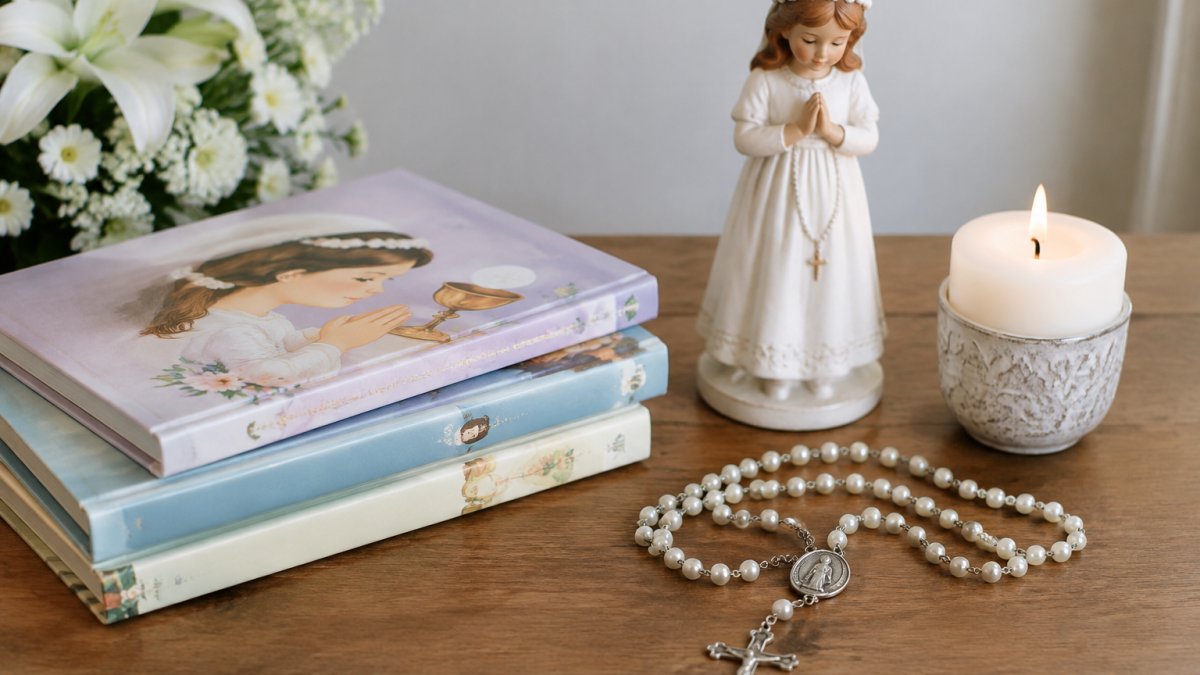
A Miraculous Medal makes a fitting gift for baptisms, first holy communions, confirmations, and the feast day of Our Lady of the Miraculous Medal on 27 November. The etiquette is simple.
The harder question, and the one most guides skip, is what to do when the recipient is not Catholic, or is Catholic but has drifted away from the practice of the faith. A medal given badly can feel like pressure.
Gifting to a Non-Catholic
A Miraculous Medal is a Catholic sacramental, and a non-Catholic recipient is not expected to treat it as one. The honest approach is to name what it is and then step back.
Explain, don't assume. Say plainly that it is a Catholic devotional medal, not a piece of jewellery, and that it carries a prayer.
Offer the meaning, not the obligation. A short line such as "This is a medal of Mary; Catholics wear it as a reminder to pray" is enough.
Let them choose how to use it. Some non-Catholic recipients will wear it out of affection for the giver; others will keep it in a drawer. Both are respectful responses to a gift.
Do not attach conditions. A gift that comes with an expectation of conversion is not a gift.
A common pattern is to give the medal alongside a card that explains the front and back imagery in two or three lines. That way the recipient understands what they are holding without needing to ask.
Gifting to a Lapsed or Returning Catholic
A lapsed Catholic is often the most receptive recipient, precisely because the medal carries a memory of the faith they grew up in. The etiquette here is gentler still.
Frame it as a remembrance, not a correction. "I thought of you when I saw this" lands very differently from "You should start wearing this again."
Choose the presentation to match the relationship. A medal on a simple black cord reads as everyday and unpressured; a medal in a presentation box reads as an occasion.
Have it blessed first if you can. A blessed medal can be worn immediately, and the blessing is not conditional on the recipient's current practice.
Mention the feast day only if it fits. The 27 November feast is a natural hook for a gift, but it is not required.
Practical Choices by Occasion
For a child's first communion, a medal on a black cord is often the most practical choice, since it can be worn immediately and replaced easily as the child grows. For an adult, a medal on a chain or in a small presentation box suits the occasion.
One detail worth knowing: if you cannot arrange investiture before the gift is given, have the medal blessed first. The recipient can be enrolled later, and the medal is fully wearable in the meantime.
Pro Tip If you are gifting to someone outside the faith, give the medal with a short written explanation of the front and back imagery. It turns an ambiguous object into a meaningful one, and it removes the need for the recipient to ask what it is.
Frequently Asked Questions
What is the prayer for the Miraculous Medal?
The prayer asks for Mary's intercession: 'O Mary, conceived without sin, pray for us who have recourse to thee.' It echoes the words that appeared on the medal revealed to Saint Catherine Labouré in 1830. Many Catholics pray it daily, often while holding the medal between their fingers. It is a short act of trust rather than a formal liturgical prayer, so it can be said anywhere: at home, on the commute, or during a quiet moment at work.
Is it necessary to have a Miraculous Medal blessed?
A blessing is not required for the medal to be worn or to serve as a reminder of faith, but the Church encourages it. A priest can bless the medal using the blessing and investiture of the Miraculous Medal, which sets it apart for devotional use. Wearing an unblessed medal is not sinful or ineffective; it simply lacks the formal blessing. Many people have a new medal blessed at their parish soon after receiving it.
How do I properly wear a Miraculous Medal?
There is no single rule about how to wear a religious medal, but tradition usually places it around the neck on a chain or cord, close to the heart. Some people pin it inside a jacket or attach it to a scapular. The medal should be treated with respect, not as a lucky charm. If it becomes damaged or worn, it can be replaced and the new one blessed. What matters most is the faith behind wearing it, not the exact placement.
What do the symbols on the front and back of the medal represent?
The front shows Mary standing on a globe, crushing a serpent underfoot, with rays of light streaming from her hands. These rays represent graces she obtains for those who ask. The inscription reads 'O Mary, conceived without sin, pray for us who have recourse to thee.' The back features a cross, the letter 'M', and the two hearts of Jesus and Mary, symbolising the close union between Christ's sacrifice and Mary's devotion.
Shop Miraculous Medals
Comments