

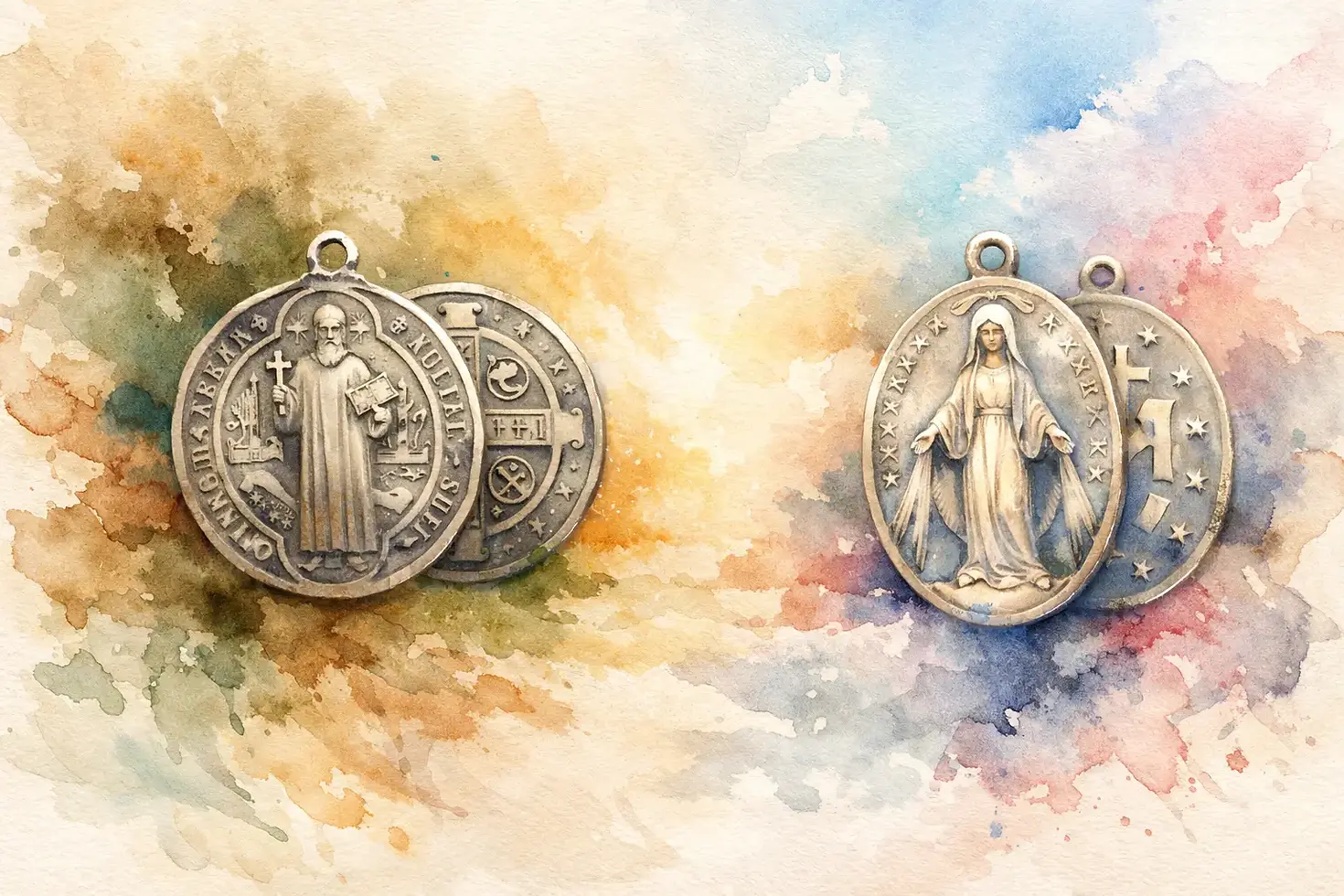
Benedictine Medal vs Miraculous Medal
- paulmarkmousley
- 2 days ago
- 6 min read
Some Catholics know straight away which medal they are drawn to. Others hold both in their hand and wonder which one is right for daily wear, prayer, or a gift. When people ask about the benedictine medal vs miraculous medal, the real question is usually deeper: what grace or devotion does each medal point us towards, and how might it help someone live the faith more faithfully?
Both medals are treasured Catholic sacramentals. Neither is a charm, and neither works like a superstition. Their purpose is to stir faith, encourage prayer, and remind us to turn to God with trust. A blessed medal worn with devotion can be a quiet, steady help in daily Christian life. But the Benedictine Medal and the Miraculous Medal have different histories, emphases, and spiritual associations, so it is worth understanding them clearly.
Benedictine medal vs miraculous medal: the first difference
The simplest difference is this: the Miraculous Medal is strongly Marian, while the Benedictine Medal is strongly associated with protection against evil through the prayers of the Church and the spiritual legacy of St Benedict.
The Miraculous Medal comes from the apparitions of Our Lady to St Catherine Labouré in 1830. It carries a message of confidence in Mary’s intercession, repentance, grace, and closeness to Jesus. On the front, Our Lady stands with rays of grace streaming from her hands. Around her are the words, “O Mary, conceived without sin, pray for us who have recourse to thee.” It is a medal that leads many people into a more tender, confident relationship with the Blessed Virgin Mary.
The Benedictine Medal has an older monastic and spiritual heritage. It is linked to St Benedict, the father of Western monasticism, and it includes Latin initials referring to prayers of exorcism and petitions for protection. Catholics often wear it when seeking spiritual defence, peace in the home, help in temptation, and a reminder to reject evil and remain faithful to Christ.
So if you are comparing the benedictine medal vs miraculous medal, it helps to see that one is centred on Marian intercession in a very direct way, and the other is centred on Christ’s victory over evil through the prayers associated with St Benedict.
What the Miraculous Medal emphasises
The Miraculous Medal is especially loved by Catholics who feel close to Our Lady or who want to grow in that closeness. It expresses a simple and powerful confidence: Mary prays for us, leads us to her Son, and obtains graces for those who come to her with trust.
Many people choose this medal during times of sorrow, uncertainty, illness, or conversion. Others wear it every day because it keeps before them the maternal care of Mary. It is also a deeply fitting gift for a child, a parent, a friend returning to the sacraments, or someone who needs encouragement in prayer.
Its symbolism is rich without being complicated. The reverse side shows the Cross, the letter M, the Sacred Hearts, and stars. Together they point to the union of Jesus and Mary in the work of salvation and invite the wearer into a life of prayer, sacrifice, and hope.
That is one reason the Miraculous Medal has remained so beloved. It is not only about protection. It is about grace, trust, and belonging to Our Lady in a practical, daily way.
What the Benedictine Medal emphasises
The Benedictine Medal is often chosen by Catholics who are especially mindful of spiritual battle. That does not mean fearfulness. It means remembering that the Christian life involves vigilance, prayer, and a firm rejection of sin and the enemy’s lies.
The inscriptions on the medal reflect this. They include initials for prayers that invoke the Holy Cross and reject Satan. This is why the Benedictine Medal has long been regarded as a sacramental of protection. People often keep it in the home, carry it while travelling, place it near a bedside, or wear it around the neck as a daily reminder that Christ has conquered evil.
At the same time, it would be too narrow to think of the Benedictine Medal only as a defence medal. St Benedict also represents order, discipline, prayer, and perseverance. His famous monastic rule helped shape Christian life around prayer and work, humility and stability. For many Catholics, wearing this medal is not only about seeking protection. It is also about asking for strength to live a more disciplined and faithful life.
Which medal should a Catholic wear?
Often the answer is not either-or. Many faithful Catholics wear one for a season and later another, or they wear both. The Church does not set them against each other. Each medal has a distinct spiritual character, and both can support a life of devotion when received with faith.
If someone is drawn to Our Lady, wants a visible sign of Marian devotion, or is looking for a medal with a gentle but profound message of grace, the Miraculous Medal is often the natural choice. It is especially meaningful for those who want to pray more simply and trustingly through Mary.
If someone is particularly seeking a sacramental associated with protection, resistance to temptation, and the spiritual tradition of St Benedict, the Benedictine Medal may be the better fit. It can also be a wise choice for those going through a troubled time, facing fear, or wanting a stronger reminder to stand firm in Christ.
Still, the decision does not need to be overthought. Sometimes a person chooses the medal they feel most prayerfully drawn to. Sometimes they choose the one that best suits the person receiving it as a gift. A medal given with faith and then blessed by a priest becomes part of a person’s prayer life in a very real way.
Benedictine medal vs miraculous medal for gifts
When choosing for someone else, the occasion matters. The Miraculous Medal is often a beautiful gift for birthdays, First Communion, Confirmation, Mother’s Day, or times when a person needs consolation and hope. It speaks warmly and directly of Mary’s care.
The Benedictine Medal is often chosen when the giver wants to offer encouragement in spiritual struggle, travel, illness, house blessing, or times of anxiety. It can also be especially meaningful for men drawn to the witness of St Benedict, though it is by no means limited to men.
For families, both medals are strong choices. One may suit a person’s prayer life more naturally than the other, but either can be a reverent and lasting gift. What matters most is that the medal is treated as a sacramental, not a fashion piece only.
A word about blessing and proper devotion
This part matters. A medal should be blessed by a Catholic priest. The blessing does not turn the medal into magic, but it sets it apart for sacred use and places it within the prayer of the Church. That is especially important with medals such as the Benedictine Medal, which has a long tradition of blessing associated with it.
Wearing a blessed medal should lead us to prayer, not replace it. The Miraculous Medal should draw us to Our Lady’s intercession, repentance, and confidence in grace. The Benedictine Medal should draw us to the Cross, renunciation of evil, and trust in Christ’s protection. If a person wears either medal without prayer or faith, the point is missed.
That is why many Catholic buyers prefer to obtain medals from a dedicated ministry-minded source rather than a general jewellery seller. The medal is not just an accessory. It is part of a life of devotion.
Is one medal more powerful than the other?
This is where Catholics need to answer carefully. It is understandable to ask, but the comparison can become misleading if we think in mechanical terms. Grace does not come from metal. It comes from God. The value of a sacramental is tied to the prayer of the Church, the faith of the person using it, and the way it turns the heart towards Christ.
So it is better not to ask which medal is stronger as though they were competing objects. A better question is which devotion is most fitting for this person, in this season, and for this need. One person may receive immense comfort through the Miraculous Medal because they need to rediscover trust in Our Lady. Another may cling to the Benedictine Medal because they need courage against fear and temptation.
There is no contradiction in that. The saints and sacramentals serve the one Gospel.
If you are choosing between these two medals, pray simply and choose reverently. If your heart is drawn to Mary’s intercession, the Miraculous Medal may be the right companion. If you are seeking a sacramental long associated with protection and steadfastness, the Benedictine Medal may be the better choice. And if both speak to your faith, there is no reason to be anxious about that. The important thing is to wear the medal with devotion, have it blessed, and let it remind you each day to stay close to Our Lord.


Comments