


Marian Devotion Symbols and What They Mean
A small medal worn close to the heart can say a great deal about a person’s faith. Marian devotion symbols have long helped Catholics keep Our Lady in mind through ordinary days, quiet prayers, family struggles, and moments when grace is especially needed. These symbols are not decorations first. They are reminders of the Gospel, of Mary’s maternal care, and of the call to stay close to Christ.
For many Catholics, Marian symbols become familiar early in life. A Miraculous Medal from a parent, a parish statue with a crown of stars, a rosary tucked into a pocket, or an image of Our Lady standing on the moon - these things speak a language of faith. Even when simple, they carry a long tradition behind them. They help make devotion visible without turning it into mere display.
Why Marian devotion symbols matter
Catholic devotion uses material signs because we are not pure spirits. We learn through sight, touch, memory, and repetition. In that sense, Marian devotion symbols serve the same human need that candles, holy water, and crucifixes serve. They draw the mind back to prayer.
That does not mean every symbol works in the same way for every person. One Catholic may have a deep attachment to the Miraculous Medal because of a family story or an answered prayer. Another may feel especially drawn to the rosary because it helps structure daily prayer. The symbol is not magic. Its value lies in what it points to - God’s grace, Our Lady’s intercession, and a life of trust.
There is also a healthy balance to keep. A medal or Marian image can support devotion, but it does not replace the sacraments, Sunday Mass, repentance, or personal conversion. Good Catholic practice keeps symbols in their right place. They strengthen faith when they are joined to prayer and a sincere Christian life.
Common Marian devotion symbols in Catholic life
Some symbols appear again and again in Catholic art, prayer, and devotional medals because they express key truths about Mary.
The Miraculous Medal
Among Marian devotion symbols, the Miraculous Medal is one of the best known and most loved. It comes from the apparitions of Our Lady to Saint Catherine Labouré in 1830. On the front, Mary stands with grace flowing from her hands, and the prayer asks, “O Mary, conceived without sin, pray for us who have recourse to thee.”
This image speaks clearly of Mary’s Immaculate Conception and her intercession. The rays from her hands remind us of graces received through God’s mercy. On the reverse, the cross, the letter M, the Sacred Hearts, and the twelve stars bring Marian devotion into direct relation with Christ’s saving work and the life of the Church.
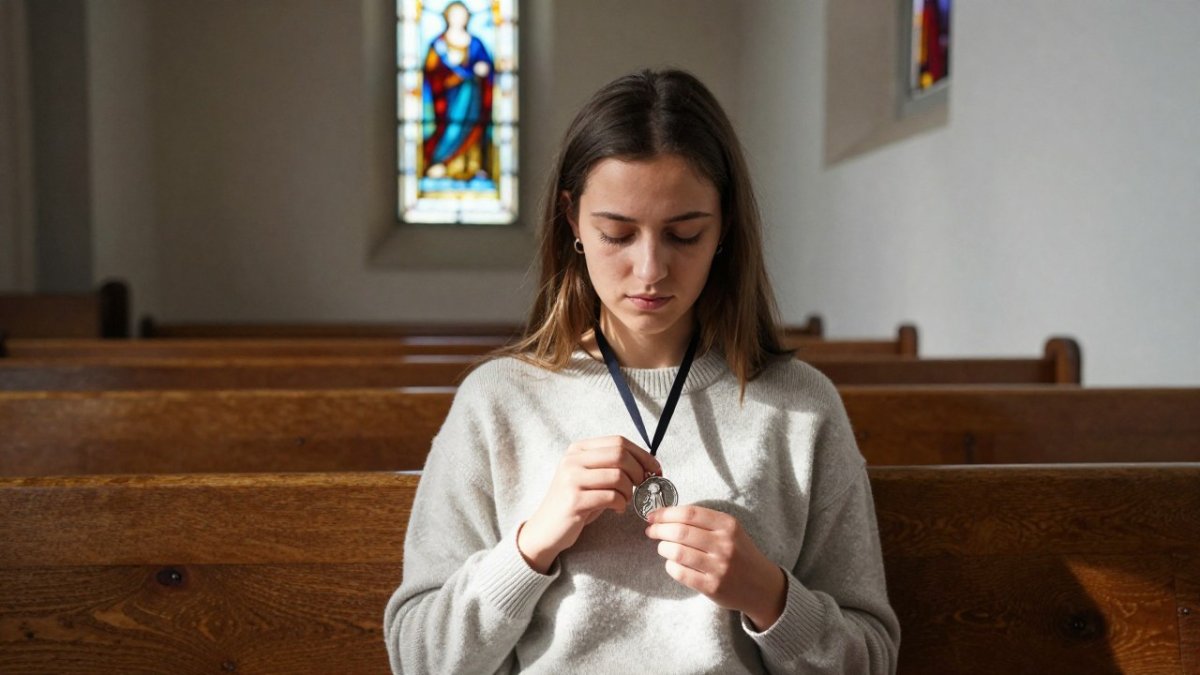
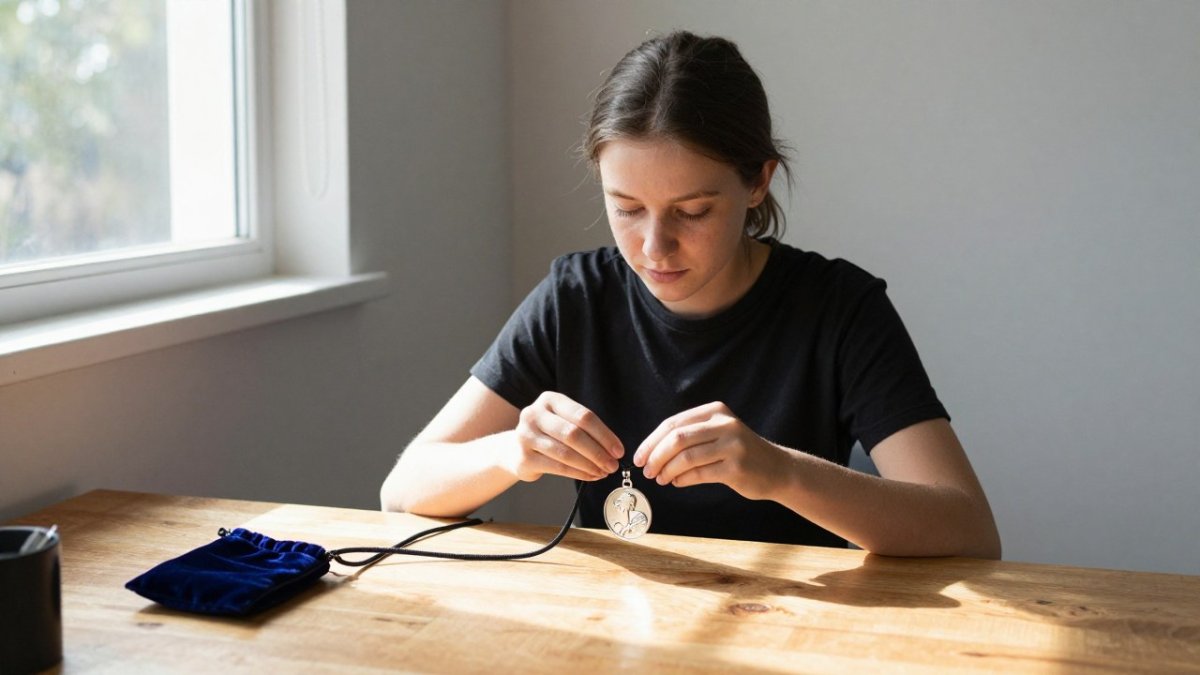
For many Catholics, this medal is both personal and practical. It can be worn every day, given as a gift, or kept as a quiet reminder to ask Our Lady’s help. If purchased for devotional use, it is fitting to have it blessed by a local priest.
The rosary
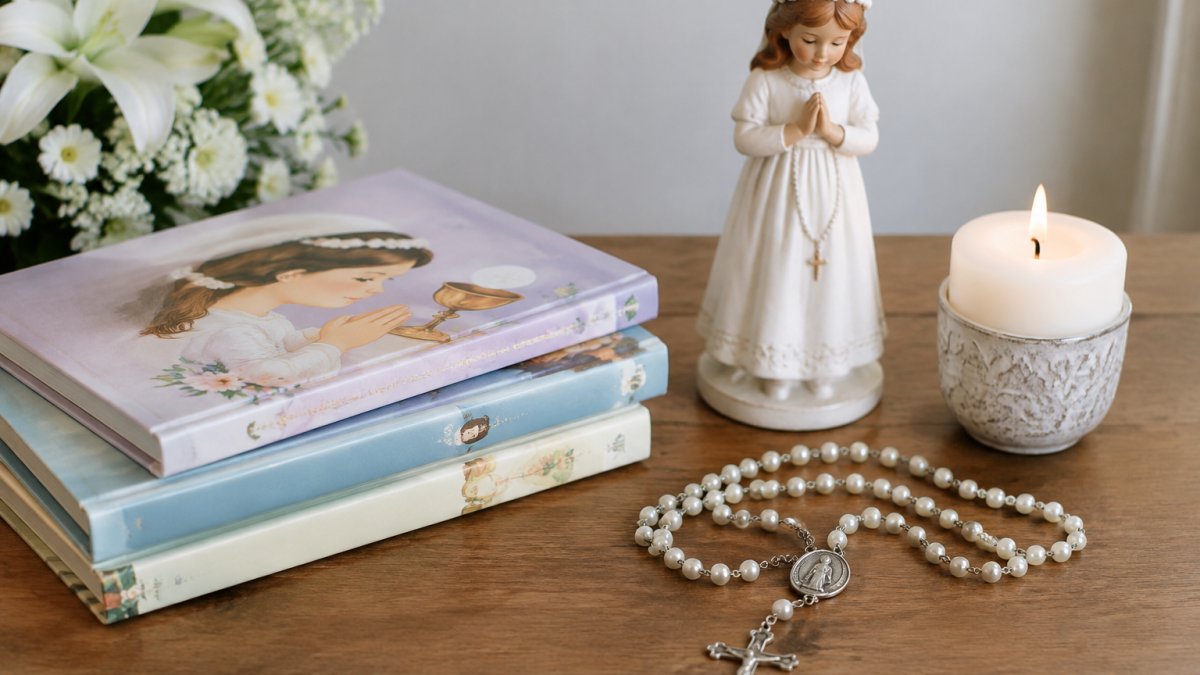
The rosary is both a prayer and a symbol. When seen hanging from a hand, wrapped around fingers, or kept beside a bed, it immediately points to Marian prayer and meditation on the life of Christ. That is an important distinction. The rosary is deeply Marian, but it is Christ-centred.
Its symbolism is gentle but strong. The beads suggest perseverance, repetition, and fidelity. They remind us that holiness is usually built one prayer at a time. In homes and parishes, the rosary often becomes a sign of family faith handed on across generations.
The lily
The lily is commonly linked with purity. In Marian imagery, it points to Mary’s virginity, her holiness, and her wholehearted yes to God. This symbol appears often in art of the Annunciation, where the angel Gabriel announces the Incarnation.
The lily’s meaning is beautiful, but it should not be reduced to a sentimental idea of innocence. In Catholic tradition, Mary’s purity is part of her complete openness to God’s will. It is not passive. It is strong, obedient, and fruitful.
The rose
The rose often expresses beauty, love, and spiritual fragrance. In Marian devotion, it also connects naturally with the rosary, since the very word has long been understood as a crown or garland of roses offered in prayer.
There is tenderness in this symbol, but again, it goes deeper than appearance. The rose can suggest love that is costly as well as lovely. Mary’s life included sorrow, misunderstanding, and steadfast faith at the foot of the Cross. So the rose in Marian devotion carries both sweetness and sacrifice.
The crown of stars
The image of Mary crowned with twelve stars comes from the Book of Revelation. It is one of the strongest biblical Marian symbols and appears on medals, statues, icons, and devotional cards. The stars speak of glory, victory, and heavenly dignity.
At the same time, this image should be read with reverence and care. Mary’s queenship is never separate from Christ’s kingship. She is honoured because of her unique place in salvation history and her faithful union with her Son. The stars do not make her distant from us. They remind us that the humble handmaid of the Lord has been exalted by God.
The moon beneath her feet
Another striking Marian symbol is the moon under Mary’s feet. This also comes from apocalyptic imagery and often appears with the crown of stars. Catholics have understood it in different but related ways - as a sign of victory, of heavenly identity, and of Mary’s participation in God’s triumph over darkness.
In devotional art, it also gives a sense of calm authority. Mary stands not in fear but in trust. For Catholics facing anxiety or spiritual discouragement, this image can be especially consoling.
What these symbols teach us about Mary
Taken together, Marian devotion symbols do more than identify a religious style. They teach doctrine in a simple form. Purity, intercession, discipleship, motherhood, sorrow, hope, and heavenly glory all appear through these signs.
That matters because devotion is healthiest when it is grounded in truth. A medal should not lead us to vague feelings alone. It should remind us who Mary is in the Church’s faith - the Mother of God, conceived without sin, a model of obedience, and a loving mother to the faithful.
It also teaches us something about our own calling. Marian symbols invite imitation as well as affection. The lily asks for purity of heart. The rosary asks for perseverance in prayer. The stars point us toward heaven. The Miraculous Medal encourages trust in Our Lady’s intercession when we need help and grace.
Using Marian devotion symbols with reverence
The best use of these symbols is steady and sincere. Wear a medal because it helps keep your heart turned to God. Keep a rosary nearby because you mean to pray it. Place a Marian image in the home because you want that room to belong to Christ and His Mother.
There can be small practical decisions here too. Some people want a medal that is simple enough for daily wear. Others are choosing a gift for a child, a sponsor candidate, or someone returning to the faith. In those cases, clarity matters more than ornament. A well-made devotional medal that can be blessed and worn easily is often the most useful choice.
As a small Catholic ministry, Miraculous Medals has always seen these items in that light - not as fashion pieces, but as visible helps to prayer and confidence in Mary’s protection. That is often what people are really seeking when they order one.
Marian devotion symbols in daily Catholic life
The strength of these symbols is their ordinary use. They go with us to work, into hospitals, through grief, onto school grounds, and into the quiet routine of home life. They are most at home not in grand display, but in faithful repetition.
A person might touch a medal before an appointment and ask Our Lady’s prayers. A family might notice a statue with a crown of stars during the month of May and remember to pray together. Someone carrying a rosary in a pocket may not even pray every bead that day, but the presence of it calls the soul back to God.
That is often how grace works in devotion - quietly, patiently, through small acts of remembrance. Marian symbols do not force faith. They support it. They keep a Catholic memory alive in the middle of distractions and strain.
If you are drawn to these signs, keep them close with simplicity and reverence. Let them lead you to prayer, to trust in Our Lady’s intercession, and above all to her Son, who never fails those who seek Him with a sincere heart.
Comments