

Durable Catholic Medals for Kids: 2026 Guide
Table of Contents
Why Durable Catholic Medals Matter for Children
Catholic Medals for Children: Types and Designs
Miraculous Medal for Kids
St. Benedict and Guardian Angel Medals
Materials That Stand Up to Daily Wear
First Communion Medal Gift: Choosing the Right Piece
How to Care for a Religious Medal Worn Every Day
Safety and Sizing for Children's Medals
Necklace length by age
Clasp and attachment security
Breakaway behaviour and strangulation risk
Small parts and choking risk
Snagging, sport, and sleep
Fit checks to run every few months
Conclusion
Frequently Asked Questions
Last Updated: October 16, 2026
Why Durable Catholic Medals Matter for Children
A Catholic medal worn daily by a child is more than jewellery: a reminder of faith, a comfort in difficulty, and a visible connection to spiritual protection. Yet many parents discover too late that a beautiful medal tarnishes, flakes, or breaks within months.
At Miraculous Medals, we've spent over five years helping Catholic families find religious medals that hold up to childhood: playground roughhousing, water, sweat, and daily wear. This guide covers the durable Catholic medals for kids that survive that use, the materials that matter, and the care that keeps them looking good.
Key Takeaway Durable Catholic medals for kids require sterling silver, gold-filled, or quality stainless steel construction, not plated finishes that wear through. Pair the right material with a protective cord or chain and regular care, and a medal can last through childhood and beyond.
Catholic Medals for Children: Types and Designs
Catholic tradition offers several medal designs, each carrying specific spiritual meaning. Understanding what each represents helps you choose one that resonates with your child's faith journey or the occasion you're marking.
Miraculous Medal for Kids
The Miraculous Medal is the most widely worn Catholic medal, especially popular for children.
It suits children because the design is simple, the symbolism clear, and it comes in genuinely child-sized versions.
When selecting a Miraculous Medal for a child, look for versions made for kids: noticeably smaller and lighter than adult medals, reducing neck strain and fitting a child's frame.
St. Benedict and Guardian Angel Medals
St. Benedict medals carry protection symbolism rooted in the saint's legacy as a defender against evil. The medal typically shows St.
Guardian Angel medals depict an angel watching over children, resonating with parents seeking comfort for their child's safety.
Both are available in child-sized formats from quality suppliers. The choice usually comes down to family tradition or the spiritual focus you want to emphasise; some families rotate medals by occasion or season.
Materials That Stand Up to Daily Wear
This is where most medal purchases fail. A child wearing a medal daily exposes it to moisture, friction, temperature changes, and impact.

Sterling silver remains a preferred choice for durable Catholic medals.
Gold-filled construction is another excellent option: a layer of solid gold mechanically bonded to a base metal core, not electroplated.
Stainless steel has gained popularity for children's medals because it's durable and affordable.
First Communion Medal Gift: Choosing the Right Piece
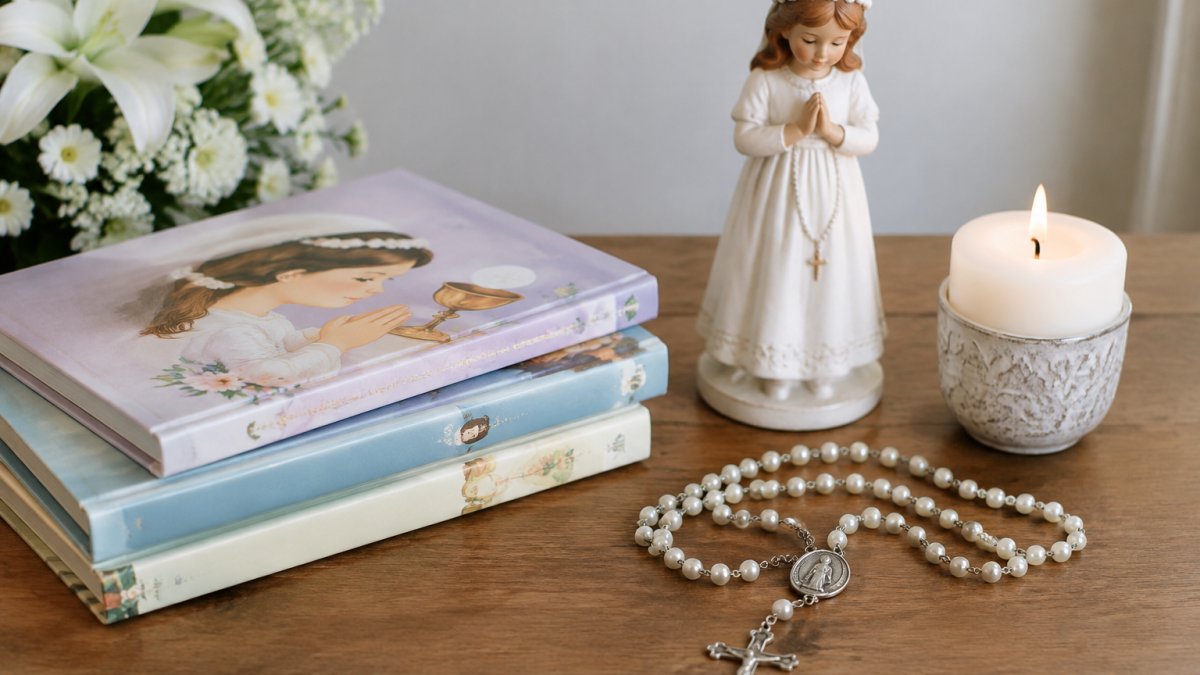
Timing matters. First communion typically happens between ages 7 and 9, when children understand the spiritual significance and can wear a medal consistently.
St Joseph's Corner
Size and weight are critical. A medal that's too large or heavy slips around, catches on clothing, and becomes uncomfortable.
Presentation matters. A first communion medal gift deserves proper packaging.
Consider the child's preferences. Some connect more with the Miraculous Medal's Marian focus, others with the protective symbolism of a St. Benedict medal.
How to Care for a Religious Medal Worn Every Day
Care advice only works when it matches the metal.
Material | What happens over time | Cleaning routine | What to avoid |
Sterling silver (92.5% silver) | Tarnishes to a dark film as it reacts with sulphur compounds in air, sweat, and some fabrics; tarnish is surface-level and reversible | Wipe weekly with a soft cloth; polish monthly with a silver cloth or a paste of bicarbonate of soda and water; rinse and dry fully | Abrasive scrubbing, chlorine, rubber bands stored against the metal, leaving it damp |
Gold-filled | The bonded gold layer is thick and wears slowly; may dull rather than tarnish | Wipe with a soft cloth; a jeweller's cloth restores shine; no chemical polish needed | Harsh polishes that can abrade the gold layer, repeated bending of thin pendants |
Stainless steel | Resists tarnish and water; can pick up surface smudges and fine scratches | Warm water, mild soap, soft cloth; dry after | Chlorine and salt water left to sit, abrasive pads |
Pewter | Soft metal; dents and scratches easily; dulls over time | Soft dry cloth only; avoid liquid polishes | Bending, dropping, abrasive cleaners |
Plated finishes (gold-plated, silver-plated, rhodium-plated) | Plating wears through at high-contact points such as the bail and edges, exposing base metal that discolours | No reliable restoration once worn through; gentle wiping only | Polishes, chlorine, friction, anything abrasive |
The tarnish mechanism, briefly. Silver tarnish is not dirt but silver sulphide, formed when silver meets sulphur in air, perspiration, and some wool and elastic fabrics.
A realistic weekly routine for a child's medal.
Daily: wipe the medal with a dry soft cloth after school or sport. Ten seconds is enough.
Weekly: inspect the cord, jump ring, and bail for fraying, stretching, or a widening gap. This is where most medals are lost, not at the pendant.
Monthly: polish sterling silver with a jeweller's impregnated cloth, or a bicarbonate-of-soda paste for heavier tarnish. Work gently around detail, rinse, and dry fully.
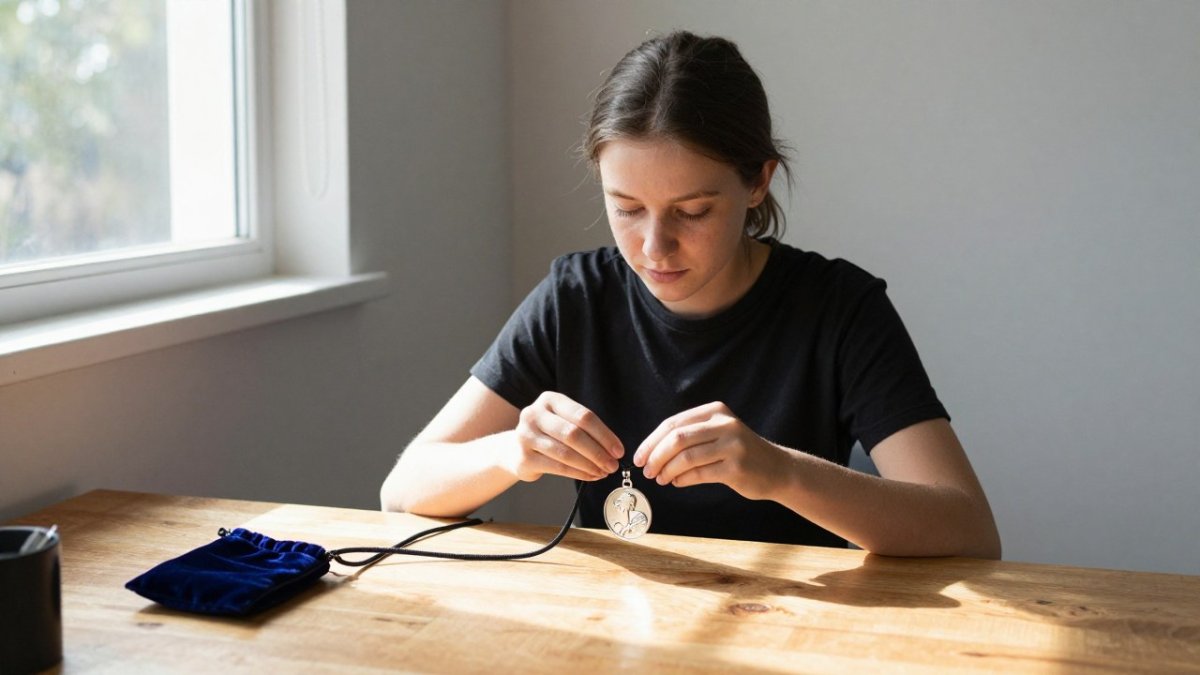
Storage that prevents damage. A small cotton or velvet pouch, one medal per pouch, prevents scratching and lets the metal breathe.
Water, chlorine, and salt. Stainless steel and gold-filled pieces tolerate occasional water well; sterling silver should be dried promptly.
Pro Tip Keep a spare cord and a spare jump ring with the medal's pouch. These two small parts fail first, cost very little to replace, and mean the child is never without their medal while a repair is arranged.
Watch Out Never use toothpaste, baking soda on plated pieces, or commercial dips on gold-filled or plated medals. These are common home remedies that strip thin gold layers and leave base metal exposed.
Safety and Sizing for Children's Medals
Sizing and safety are where a child's medal differs most from an adult's, and where generic advice fails. The guidance below is organised by age band and by the failure points that cause injuries, lost medals, and discomfort.
Necklace length by age
Measure length on the child, not by age. As a starting point:
Age band | Typical cord or chain length | Where it sits | Notes |
Under 3 | Not recommended for unsupervised wear |
| Choking and strangulation risk; treat as a supervised keepsake only |
3-6 | Approximately 36-41 cm (14-16 inches) | Just below the collarbone | Supervised wear only; remove for sleep, bath, and active play |
7-9 | Approximately 41-46 cm (16-18 inches) | Mid-chest | First Communion age; suitable for daily wear with checks |
10-12 | Approximately 46-51 cm (18-20 inches) | Upper chest to sternum | Allow for growth; re-measure every 6-12 months |
13+ | Approximately 51-56 cm (20-22 inches) | Sternum | Adult sizing begins; still avoid lengths that dangle below the ribcage |
A cord hanging below the ribcage is the biggest snag risk, catching on door handles, playground equipment, seat belts, and handlebars. Keep the medal high on the chest and the cord short enough that it cannot be grabbed from behind.
Clasp and attachment security
Lobster clasps are the most secure common option for children and are easy for small hands to manage once shown how.
Spring-ring clasps are compact but can be fiddly and are more prone to accidental opening under tension.
Magnetic clasps should be avoided for young children; they release under relatively light pull and are a swallowing hazard if they come apart.
Breakaway behaviour and strangulation risk
A child's necklace should release under a firm snag rather than hold. Standard cords and lightweight chains generally do; reinforced cords, thick leather thongs, and heavy chains do not, increasing injury risk if caught. For a deliberate safety feature, look for a breakaway clasp rated for children's jewellery. Never use a chain so strong it will not give under a child's body weight.
Small parts and choking risk
Medals are generally too large to swallow, but their components are not. For children under three, and any child who still mouths objects:
Avoid charms, beads, and detachable pendants smaller than a 20-cent coin.
Check that the medal's bail is welded or securely closed, not an open loop that can be bent apart.
Remove the medal for sleep, car seats, and any activity where the child is unsupervised.
Inspect monthly for loose jump rings, cracked bails, or worn cord ends.
Snagging, sport, and sleep
Remove the medal for contact sport, swimming, trampolining, and rough play; even under a shirt it can snag on equipment and be bent or lost. For sleep, the cord can tighten as the child rolls, so take the medal off and place it in its pouch on the bedside table. If the child is distressed without it, pin a small medal inside a pillowcase or keep it on a bedside shelf instead.
Fit checks to run every few months
Two fingers should fit comfortably between the cord and the neck; if not, the cord is too tight.
The medal should sit flat against the chest, not swing freely below it.
The cord should not leave a mark on the skin after a day's wear.
Re-measure length at each birthday and after any growth spurt; a cord that fitted at seven may sit too high or too low by nine.
Watch Out Never place a medal necklace on a baby or toddler for sleep, car travel, or unsupervised play. The risk is strangulation, not loss, and it is not worth taking (Kids Health Info : Safety: Choking, suffocation and strangulation prevention).
Key Takeaway Match cord length to the child's measured neck, choose a clasp that will release under a snag, inspect the cord and jump ring monthly, and remove the medal for sleep, sport, and water. These four habits prevent almost every serious incident and most lost medals.
Conclusion
Finding a durable Catholic medal for your child means prioritising material quality over price, choosing a size and design that resonates with their faith, and committing to basic care.
Our selection of durable Catholic medals for kids includes Miraculous and St. Benedict designs in genuine sterling silver and quality stainless steel, each in child-appropriate sizes with a black cord included.
Frequently Asked Questions
What should I look for in a durable Catholic medal for a child?
Choose medals made from sterling silver, gold-filled, or stainless steel, materials that resist tarnishing and flaking with daily wear. Look for child-sized designs (typically 12-16 mm) that won't snag on clothing, and opt for lightweight chains or cords that won't strain a child's neck. Verify the medal has a smooth finish with no sharp edges. Miraculous Medals and St. Benedict medals are popular choices because they're sturdy and carry deep spiritual meaning for Catholic families.
Can children wear a Miraculous Medal every day?
Yes. Children can wear a Miraculous Medal daily if the medal is child-sized and attached to a lightweight, safe cord or chain. Many Catholic families choose to have their children wear one as a symbol of Mary's protection during everyday activities. Ensure the cord or chain is durable enough to withstand regular wear, and check it periodically for signs of fraying or weakness. A black cord, which many suppliers include, is both traditional and practical for children.
Which Catholic medal is suitable for a child's First Communion?
The Miraculous Medal is a traditional First Communion gift because it represents Mary's protection and is deeply rooted in Catholic devotion. St. Benedict medals are also appropriate, symbolising spiritual strength and protection from evil. Both come in child-sized versions and can be presented with a cord for immediate wear. When choosing a First Communion medal gift, consider the child's age, the medal's size and weight, and whether you want a traditional silver or gold finish, or a more affordable stainless steel option.
How do you care for a Catholic medal worn every day?
Clean your medal gently every few weeks with a soft, damp cloth and mild soap, then dry it thoroughly. For sterling silver or gold-filled medals, you can use a silver or gold polishing cloth to restore shine. Avoid harsh chemicals, abrasive scrubbers, and prolonged exposure to moisture. Check the cord or chain regularly for wear and replace it if it becomes frayed or weak. Store the medal in a dry place when not worn, and handle it with care to avoid denting or scratching.
Are Catholic medals safe for young children to wear?
Yes, when chosen carefully. Select child-sized medals with smooth edges and no protruding parts that could catch on clothing or skin. Use lightweight, breakaway cords or chains designed for children so the medal won't cause injury if caught. Avoid medals with small detachable parts that pose a choking hazard. Always supervise very young children wearing medals, and consider waiting until a child is old enough to understand the devotional significance before introducing daily wear.
Shop Miraculous Medals

Comments